The first 30 days after a first order: what to send.
The weeks after a first order decide whether there is a second. A few well-timed messages help. Too many, and the customer learns to ignore you.
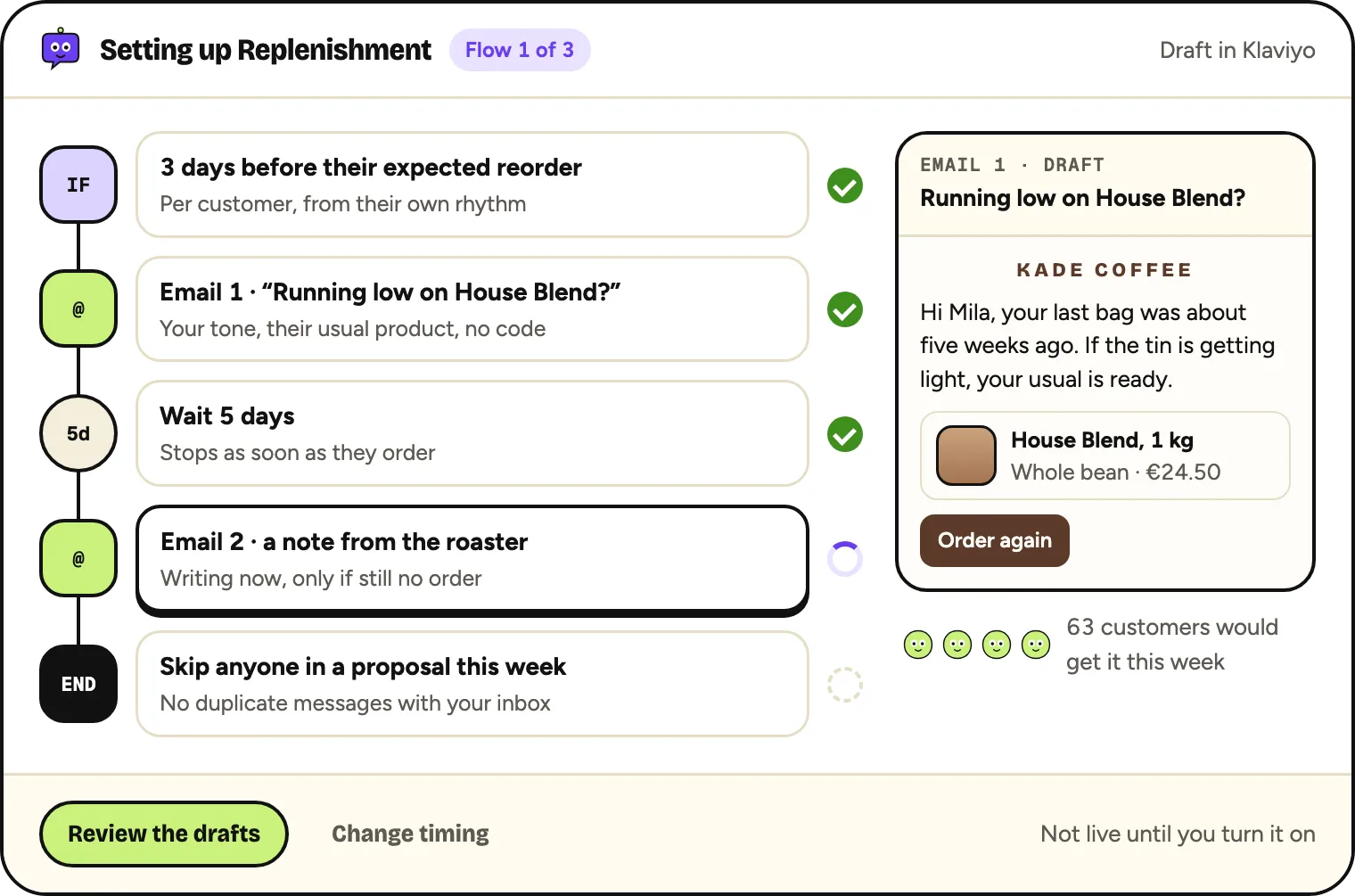
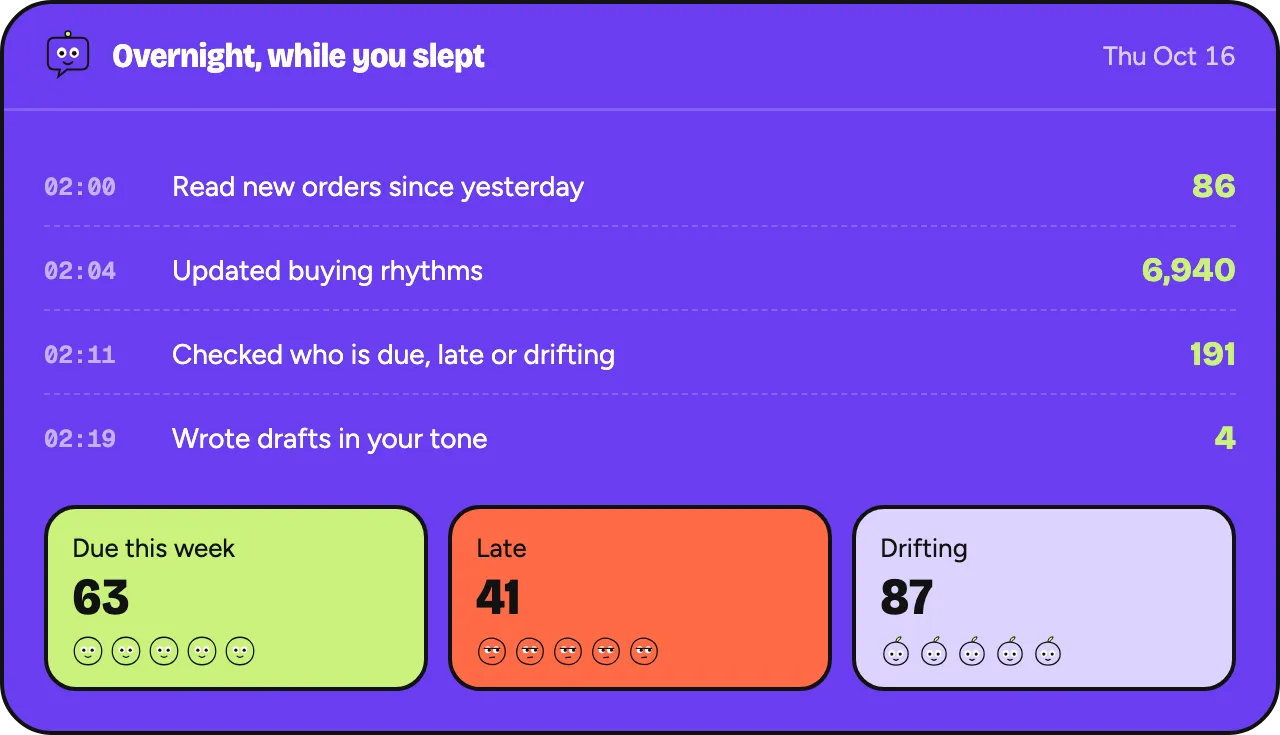
Oftenflow does this per customer, every morning.
Join the waitlistFollow the product, not the calendar
Map what the customer goes through: waiting, unpacking, first use, using it up. Each message should fit one of those moments.
Timing depends on your delivery time and on how long the product lasts. A small bag of coffee and a 90-day supply of vitamins need different schedules.
A simple schedule
- Order and shipping confirmations: service messages, sent when they happen.
- The day after delivery: how to get the most out of the product. No offer.
- One to two weeks after delivery, once they’ve used it: ask for a review or a short reply.
- Shortly before the product is likely used up: a reminder with a direct reorder link.
A 1 kg bag of coffee, delivered on day 2. At about 30 g a day, it lasts about 33 days. How-to on day 3, review request on day 14, reminder around day 30.
Work out the reminder moment
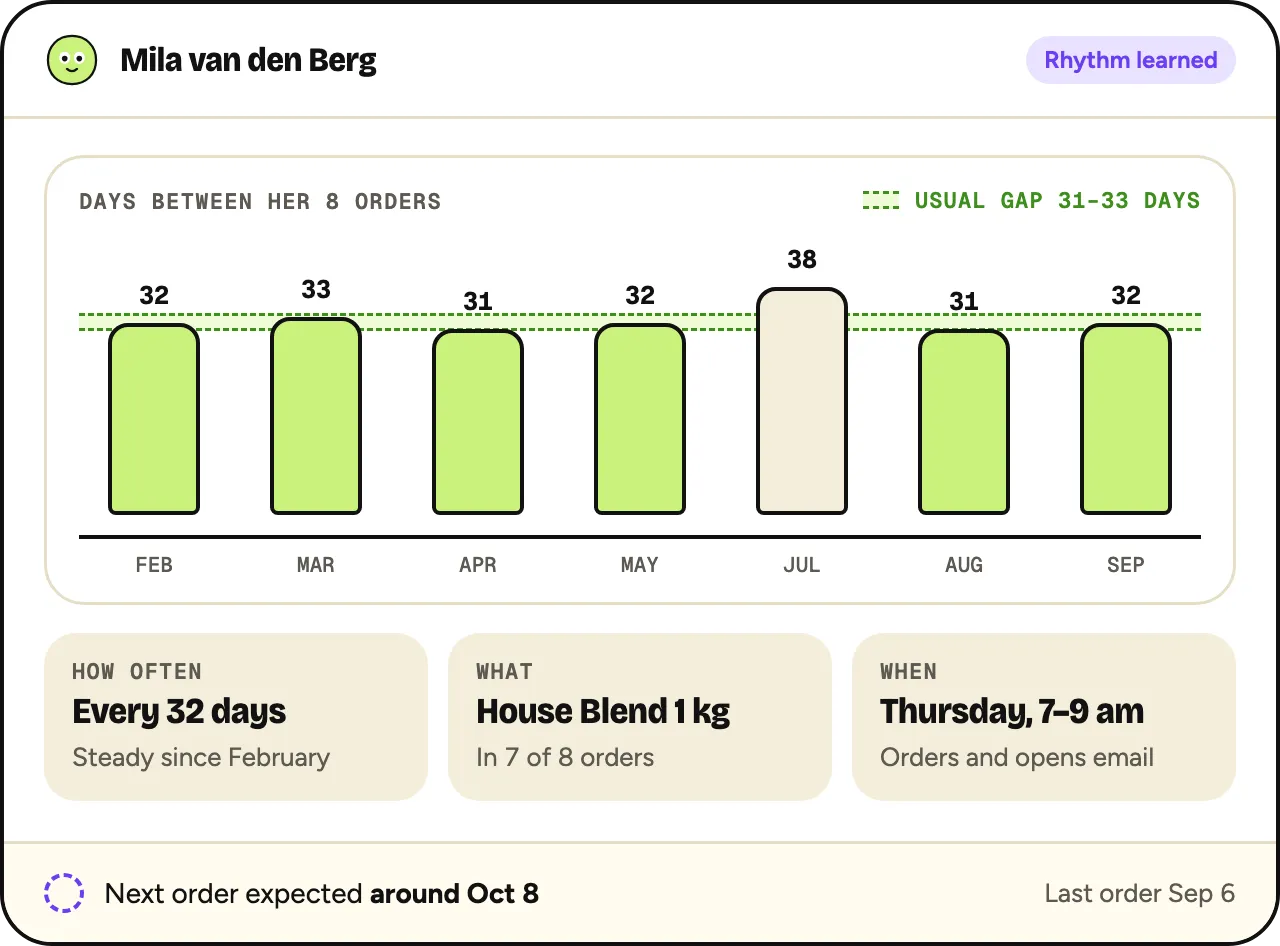
For a first order you don’t know the customer’s own pace yet. Use the product size and typical daily use. Once you have data, use the median time between orders of customers who bought the same product.
Allow for delivery time. If shipping takes two days, a reminder on the day it runs out is already too late.
Run-out day = delivery day + quantity ÷ daily use. Reminder day = run-out day − delivery time − a few days of margin.
Base it on delivery, not on the order
Send the how-to after delivery, not after the order. If you can’t see delivery dates, add your usual delivery time to the order date.
A review request before the customer has used the product gets thin answers, or none.
How much is enough
A sensible start is about four marketing messages in the first 30 days, on top of service messages. Newsletters and campaigns count towards that.
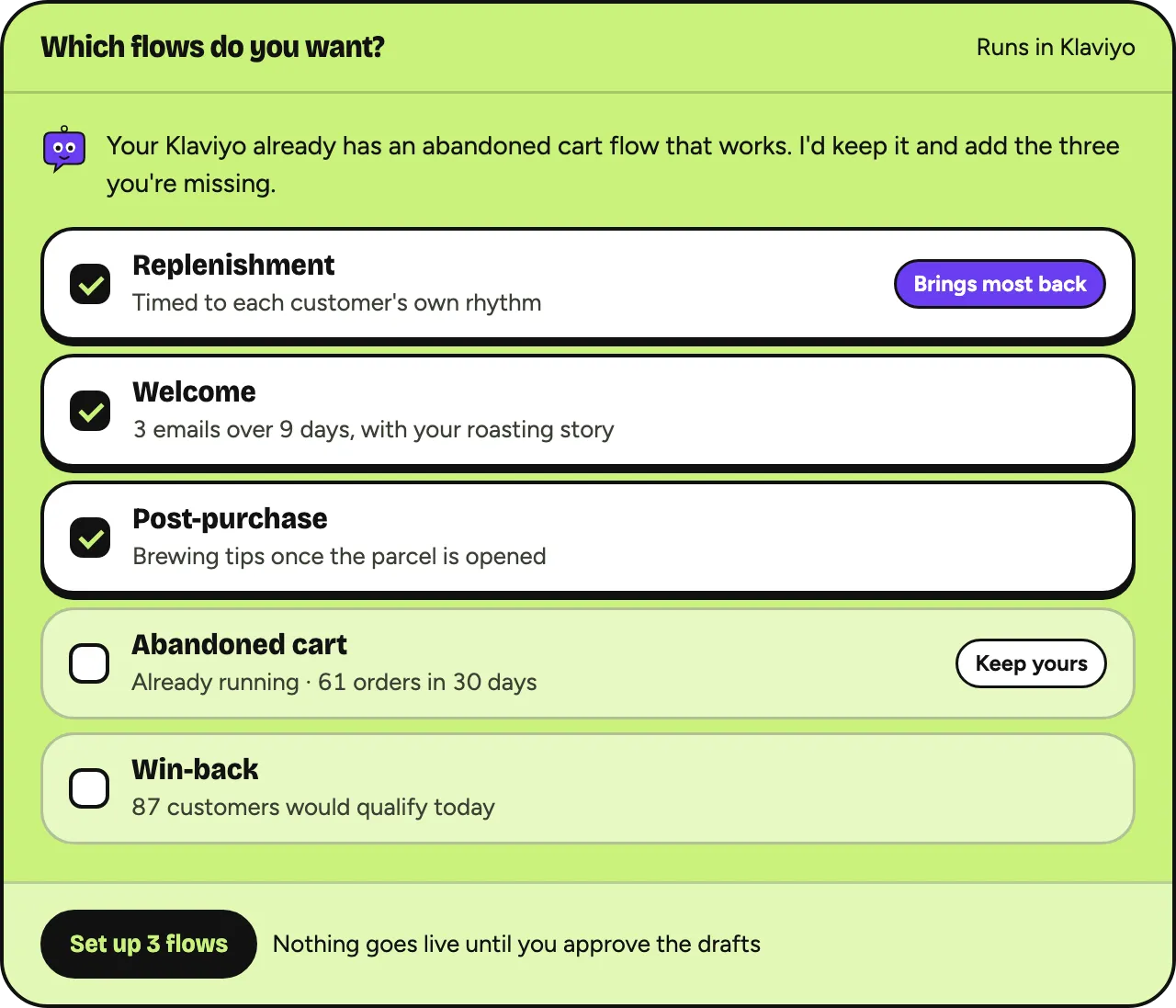
- Pause or merge a welcome series while the post-purchase messages run.
- Skip the reminder if the customer already reordered.
- Hold back cross-sell until they’ve used the first product.
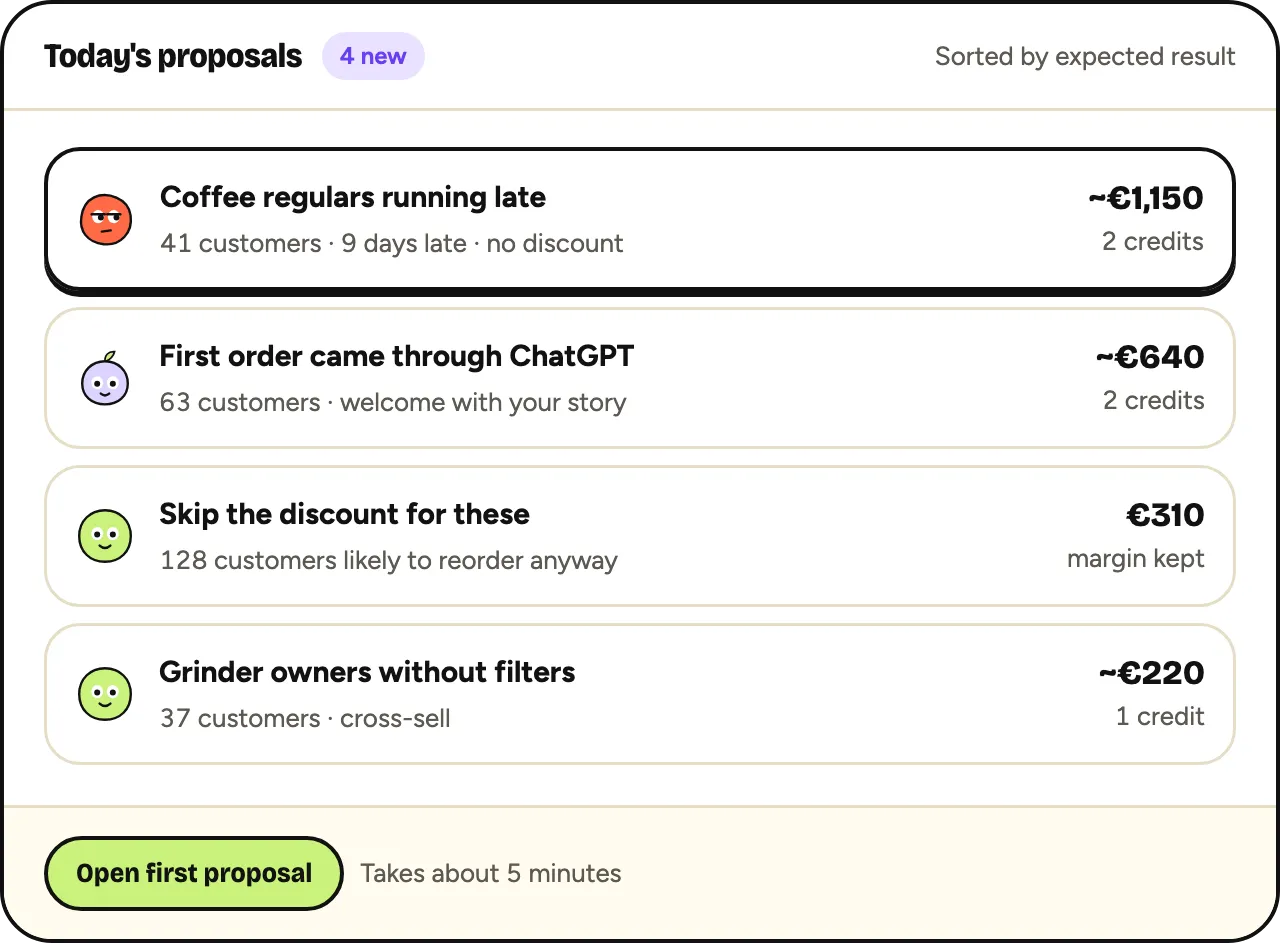
- Don’t add a discount to the first reminder by default. See who reorders without one.
Oftenflow is being built to plan this per customer: the reminder lands near the moment their product is likely used up, adjusted for how much they bought.
Oftenflow is in development. This describes what we’re building.