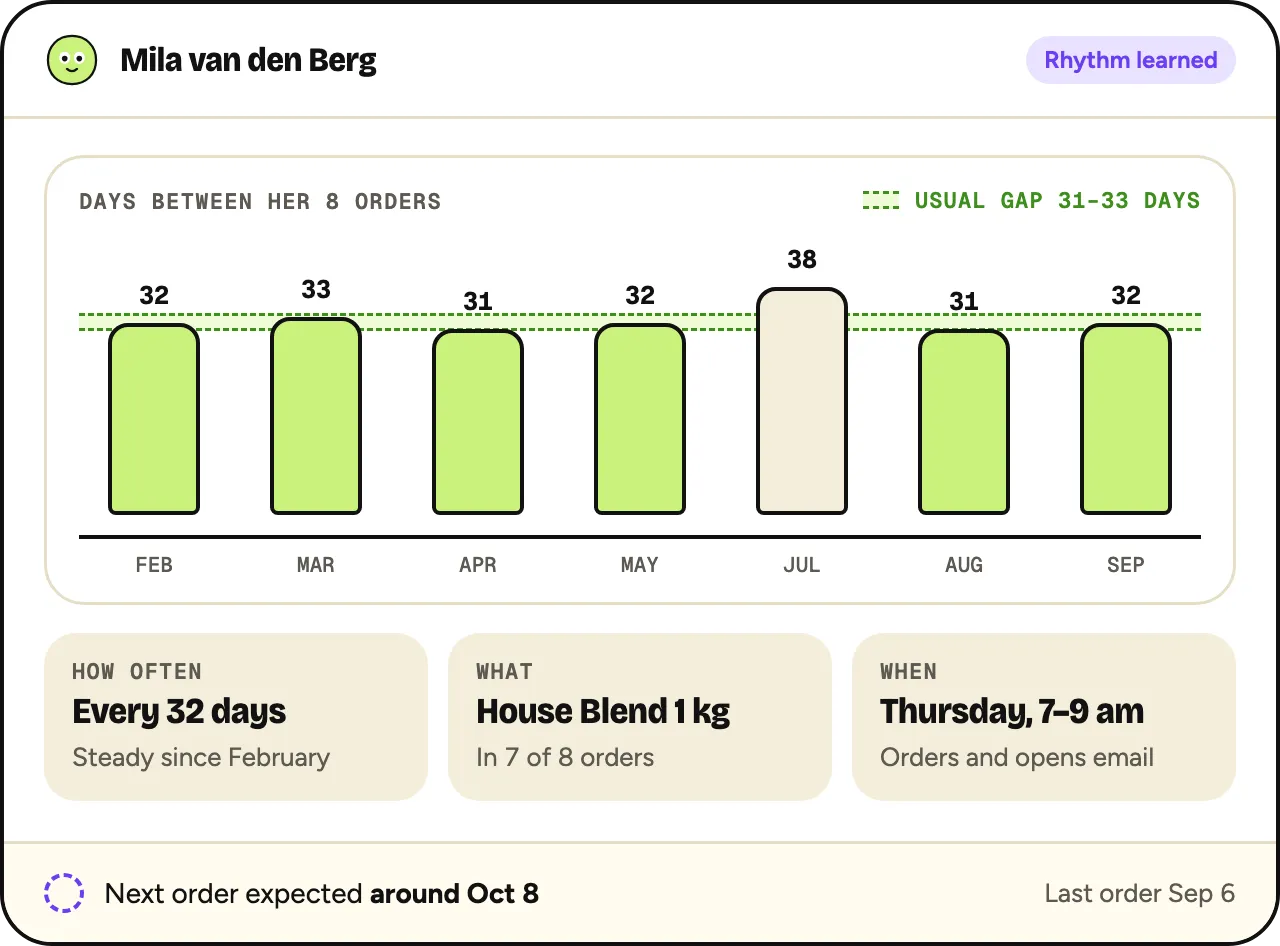
Second order rate: the number to watch first.
Many first-time buyers never order again. The share that does is your second order rate. Early on, it says more about where your store is heading than revenue does.
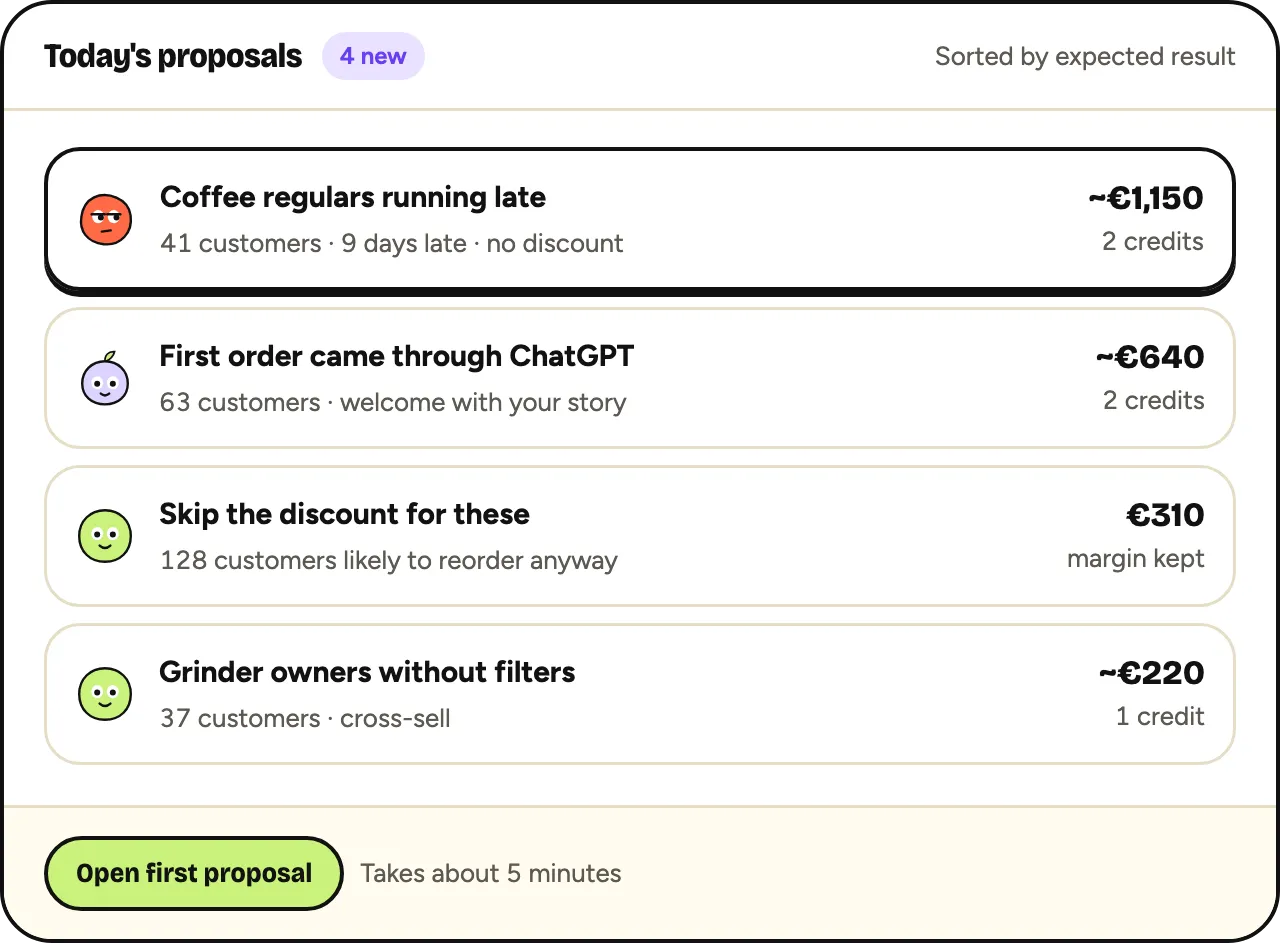
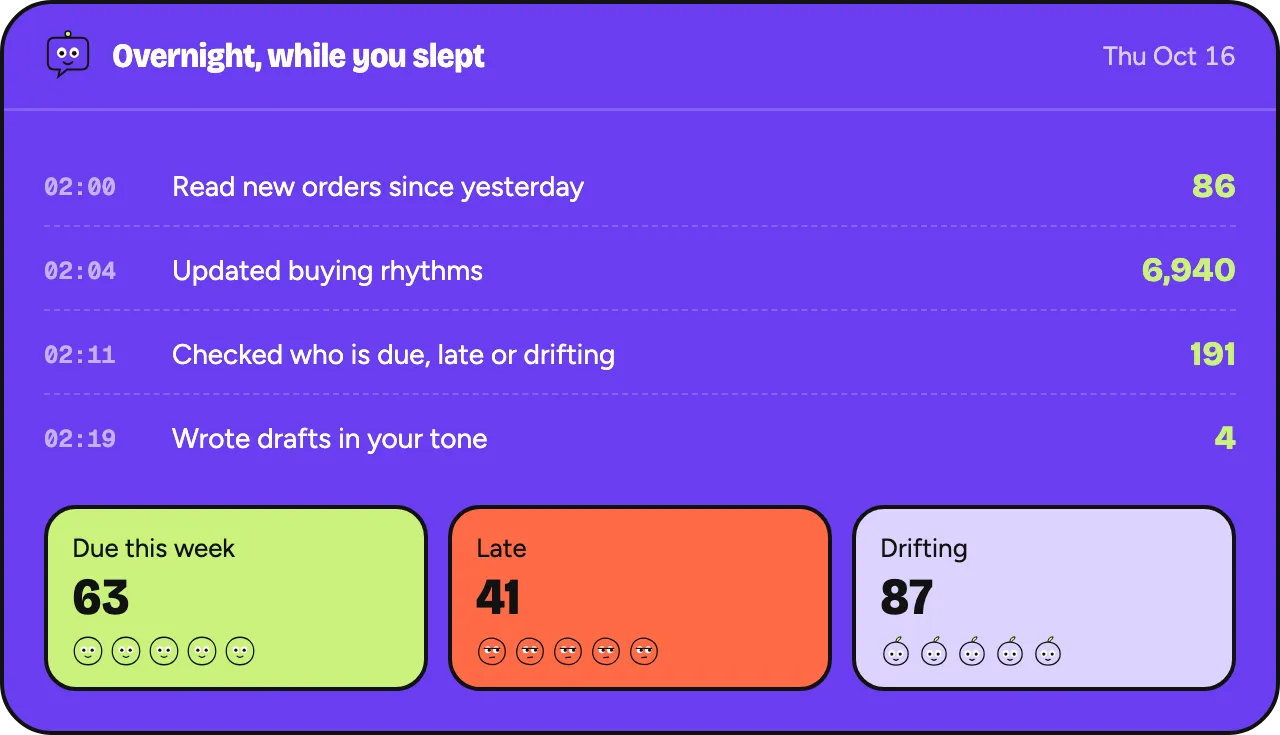
Oftenflow does this per customer, every morning.
Join the waitlistWhy this number comes first
For most stores, the step from one order to two is the biggest drop in a customer’s life with you. Check it in your own data: count customers with one, two, three and more orders.
Revenue can grow while this number falls, for example when ads bring in buyers who don’t return. Then every month of growth costs more.
Measure per cohort, within a window
Group customers by the month of their first order. That group is a cohort.
For each cohort, count who placed a second order within a fixed window, for example 90 days. Use the same window for every cohort, so you compare like with like.
Only report cohorts whose window has fully passed. Last month’s cohort hasn’t had 90 days yet.
Second order rate (90 days) = customers with a second order within 90 days of their first ÷ all customers in the cohort.
A worked example
Pick a window that fits your product. For something used up in a month, 60 to 90 days is fair. For slower products, use 180 days.
Look at the trend across cohorts, not at one month. A single cohort can be skewed by one campaign or one bulk buyer.
In March, 400 people placed their first order. Within 90 days of that order, 92 ordered again. 92 ÷ 400 = 23%. April: 380 first-time buyers, 80 second orders, 21%.
Common mistakes
- Measuring per calendar period instead of per cohort: a busy December fills the count with buyers who haven’t had time yet.
- Counting a split shipment or a corrected order as a second order.
- Treating a guest checkout and an account as two different customers.
- Counting subscription renewals as second orders: they are automatic, not a decision.
- Comparing cohorts with different windows, or cohorts whose window hasn’t closed.
What moves it
Most of the work happens between the first delivery and the moment the product runs out.
- A first order that arrives on time and as described.
- A short note after delivery on how to use the product, without a sales pitch.
- A reminder close to when the product is likely used up, with a direct reorder link.
- Second order rates per channel, not only cost per first order. Some channels bring buyers who rarely return.
- A separate look at buyers who came in with a first-order discount.
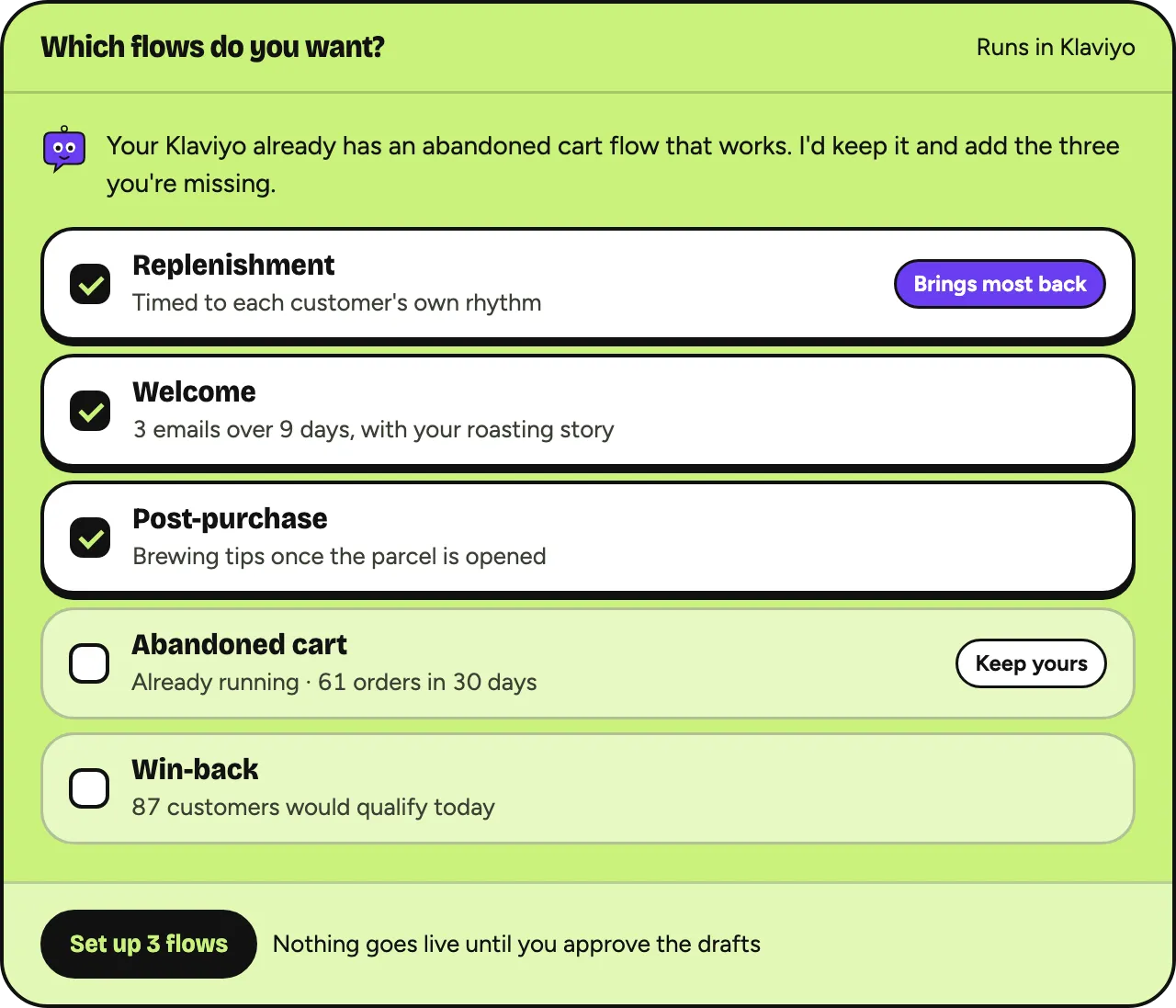
Oftenflow looks at every new customer’s first order and proposes a reminder when their product is likely running out, so the second order has a clear moment.
Oftenflow is in development. This describes what we’re building.