Why your Klaviyo bill grows, and how to lower it.
Klaviyo prices its email plans by active profiles: everyone in your account who can still receive marketing. As your store grows, so does that number, including people who haven’t opened anything in years.
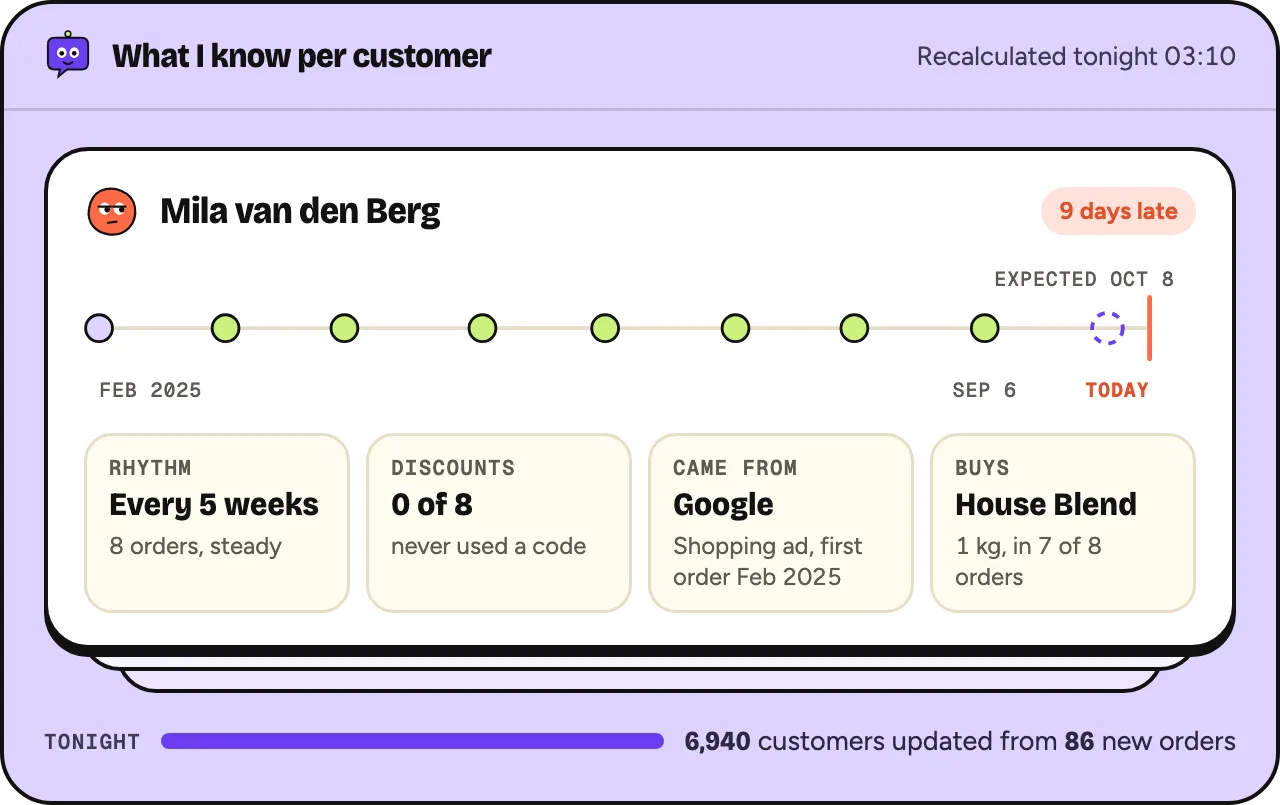
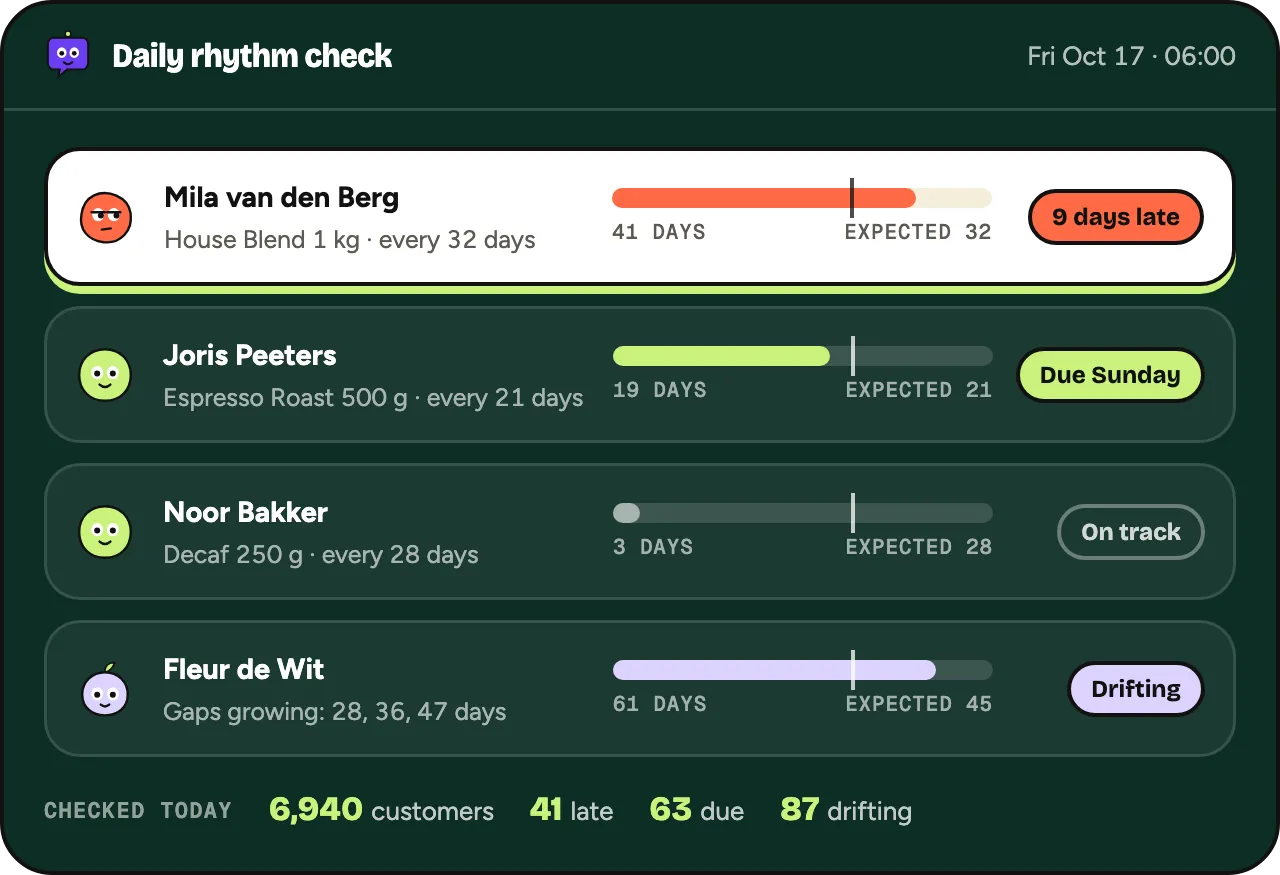
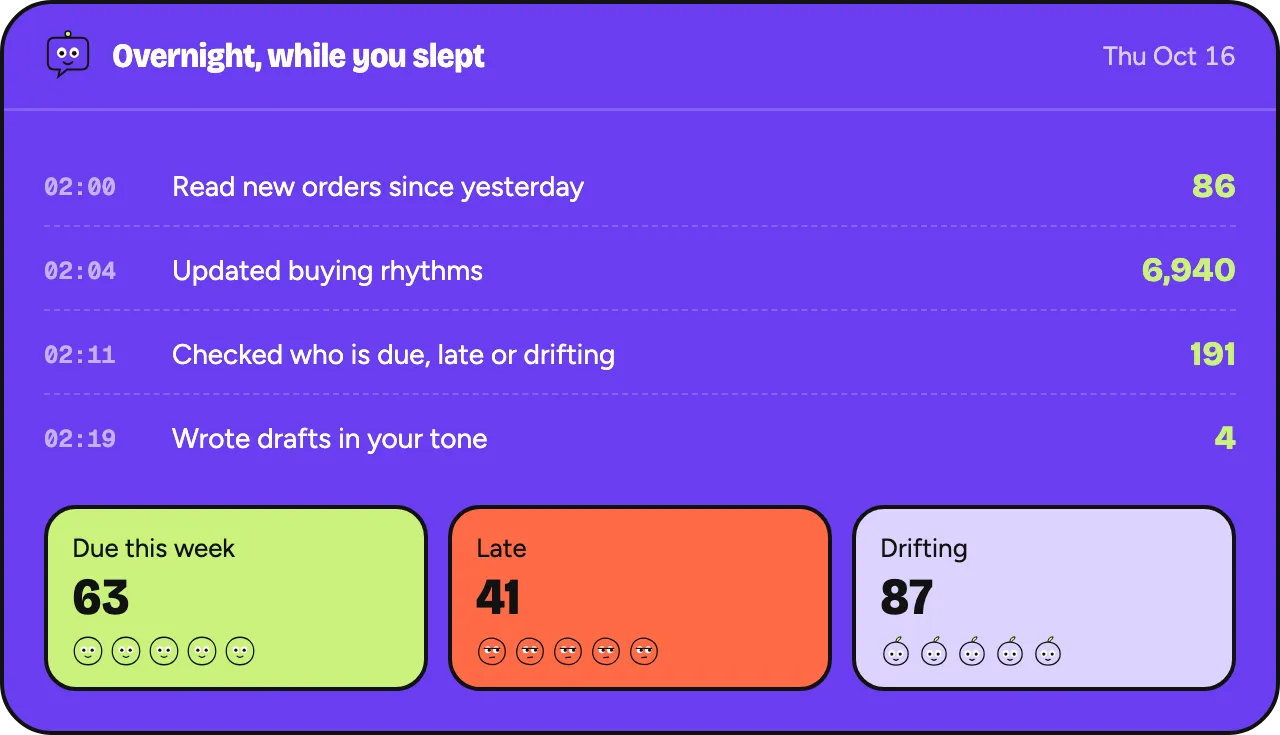
Oftenflow does this per customer, every morning.
Join the waitlistWhat counts as an active profile
According to Klaviyo’s help centre, billing covers profiles that can still be sent marketing. Suppressed and unsubscribed profiles stay in your account for reporting but are not billed once the suppression has been applied.
Every checkout, sign-up form and integration can add profiles, so the count grows even when you don’t actively build your list.
Lowering the count safely
- Build a segment of profiles that haven’t opened, clicked or ordered for a long period, for example 12 months, and leave out anyone with a recent order or checkout.
- Suppress that segment instead of deleting it: suppressed profiles keep their history for reporting.
- Check the new count after it has refreshed, which Klaviyo says can take up to 72 hours.
- Choose the lower tier yourself under Billing; Klaviyo doesn’t downgrade automatically, and the change has to be made before your cycle renews.
What not to suppress
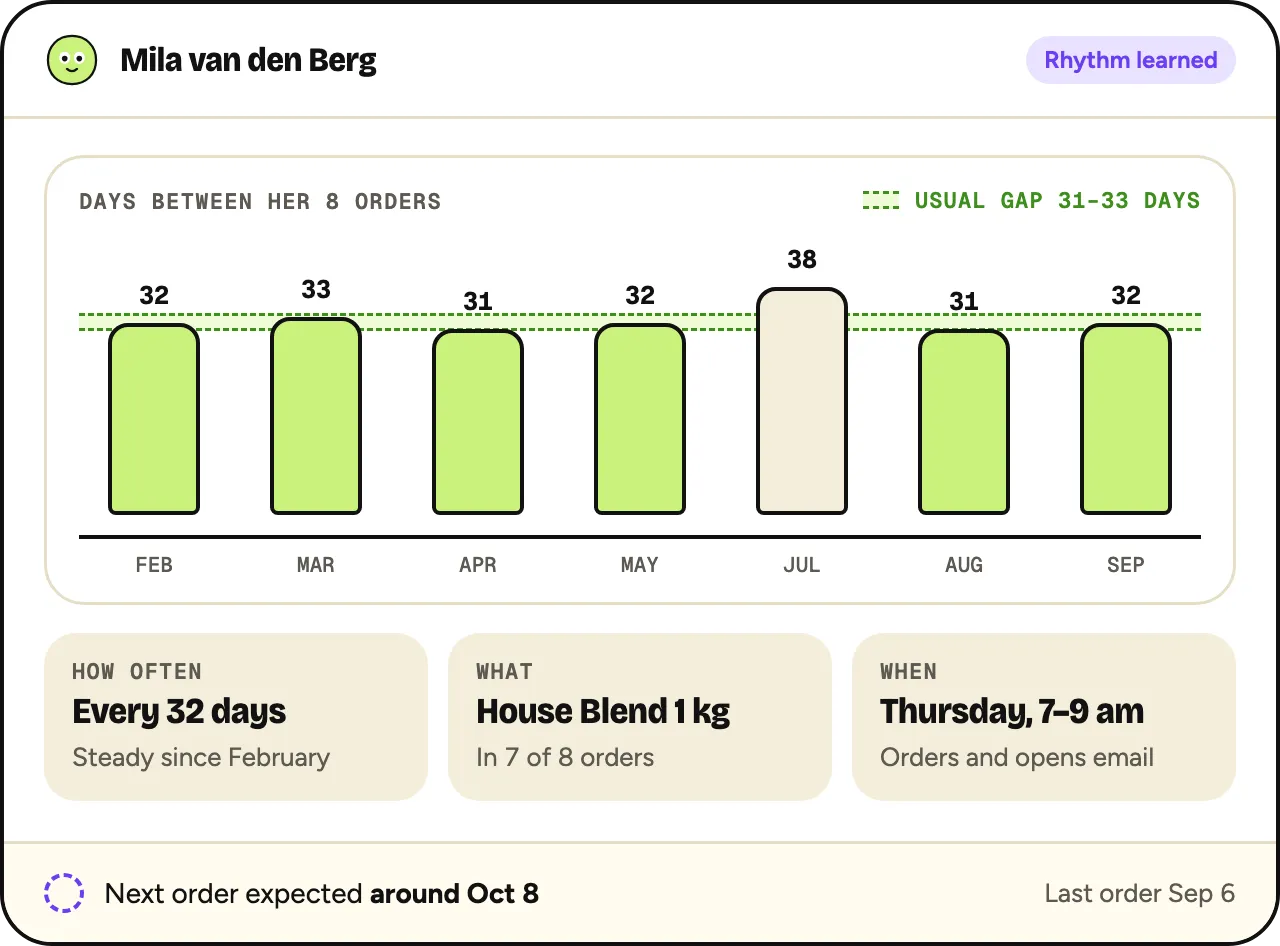
Recent buyers, people with an open checkout and customers who order on a long rhythm. A customer who buys once a year looks inactive for eleven months.
This is where a per-customer rhythm helps: “inactive” means late compared with their own pace, not a fixed number of days.
When a different setup makes sense
If you mostly send a few well-timed reminders, paying per contact for a full suite can be more than you need. Options include a cheaper all-in-one tool, Shopify Messaging, or a transactional provider billed per email sent.
Whatever you choose, keep your data exportable, so switching later doesn’t mean starting over.
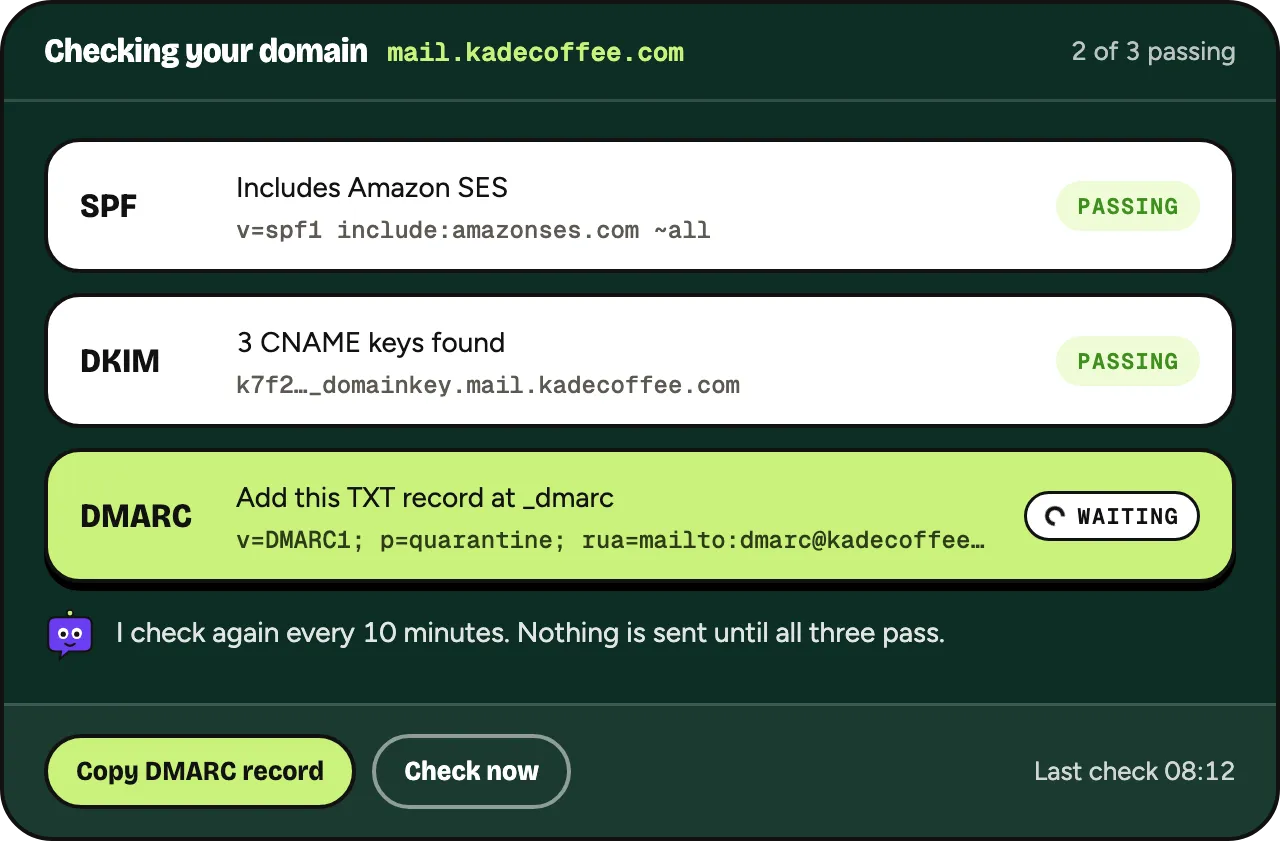
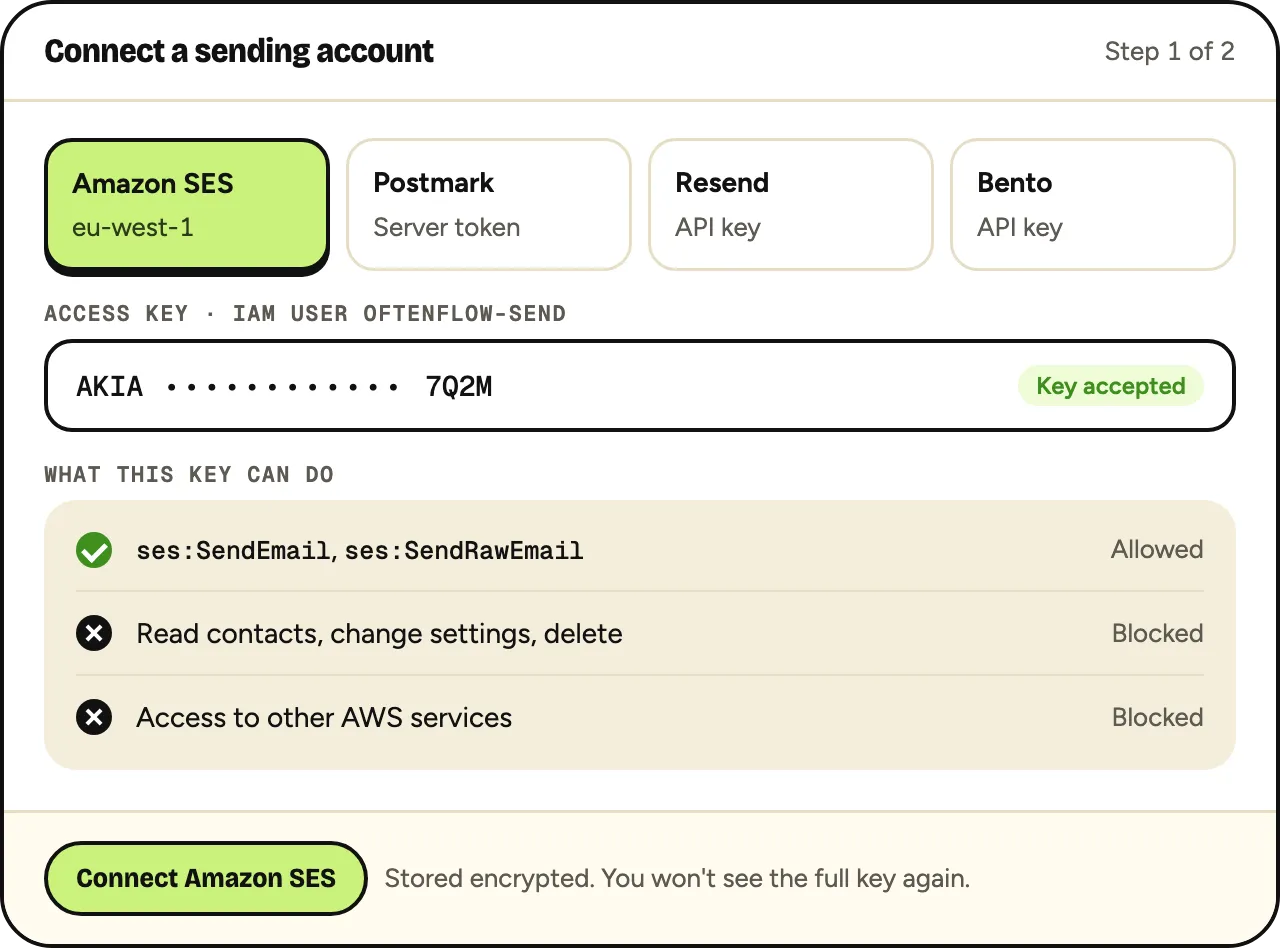
Oftenflow works on top of Klaviyo, and pricing never depends on your number of contacts. A planned module will let you send through your own sending account instead.
Oftenflow is in development. This describes what we’re building.