Subscriptions or reorder reminders: which fits?
A subscription sends the product automatically. A reminder asks the customer at the right moment. Both aim for the same repeat order, and they suit different products and customers.
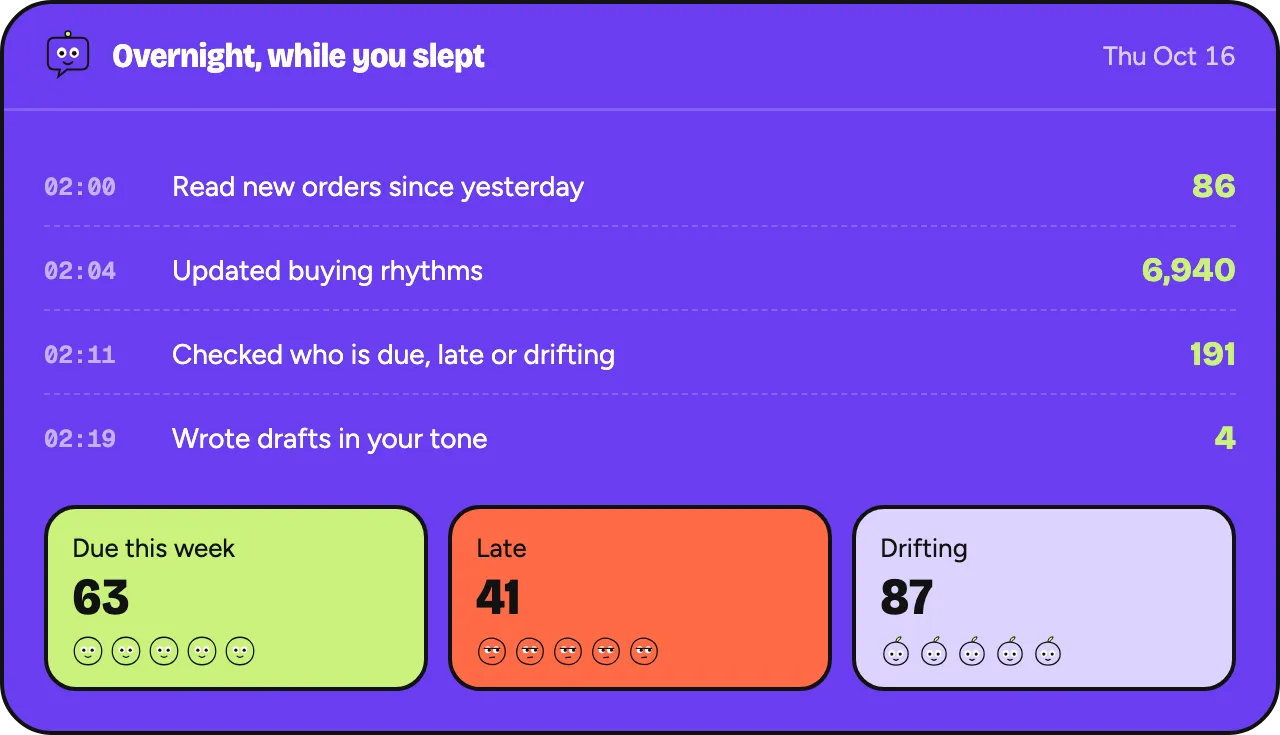
Oftenflow does this per customer, every morning.
Join the waitlistHow they differ
- Subscription: the order happens unless the customer acts. Predictable for you, fixed for them.
- Reminder: nothing happens unless the customer acts. Flexible for them, less predictable for you.
- Subscriptions usually come with a discount to make the commitment worth it. Reminders don’t need one.
- A subscriber who cancels is visible. A customer who ignores a reminder just goes quiet.
Which products suit which
Subscriptions fit products used at a steady pace that customers don’t want to think about, such as filters, pet food or daily vitamins.
Reminders fit products with an uneven pace, or where customers like to choose each time. Think of coffee in changing flavours, seasonal skincare, or anything bought in varying amounts.
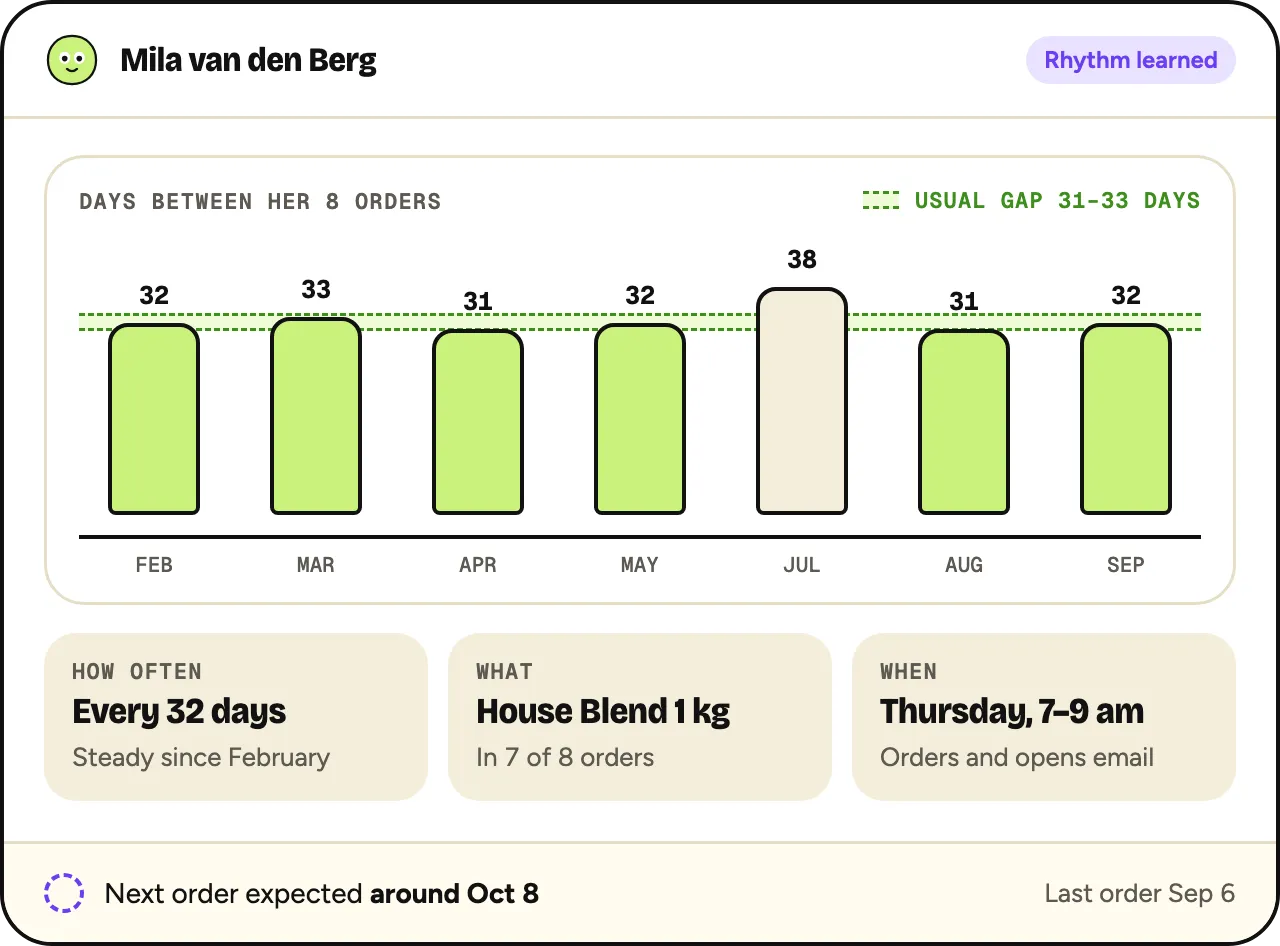
Check your own data. If repeat customers’ gaps between orders are steady, a schedule works. If they vary a lot, a fixed schedule will often be early or late.
Churn and flexibility
Every delivery that comes too early or too late is a reason to pause or cancel. Options to skip, pause or move a date help lower that friction, at the cost of predictability.
Measure churn per month, and look at how long subscribers stay, not only how many sign up.
Monthly subscription churn = subscriptions cancelled in the month ÷ active subscriptions at the start of the month.
Margin
A subscription discount applies to every order, including orders that would have happened anyway. Compare that with what a reminder costs.
Which wins depends on how long subscribers stay and how often reminder customers return. Use your own numbers.
A €30 product with €12 margin per order. With 10% off for subscribers, margin drops to €9. A subscriber who stays for 10 orders brings €90. A reminder customer who orders 8 times at full price brings €96.
Using both
Most stores don’t have to choose. Offer the subscription to customers who want it, and remind everyone else.
- Keep active subscribers out of reorder reminders.
- Offer a subscription after a customer has reordered two or three times at a steady pace, not at the first order.
- When a subscriber cancels, move them to reminders instead of losing contact.
- Measure the two groups separately: a renewal isn’t a decision, a reorder after a reminder is.
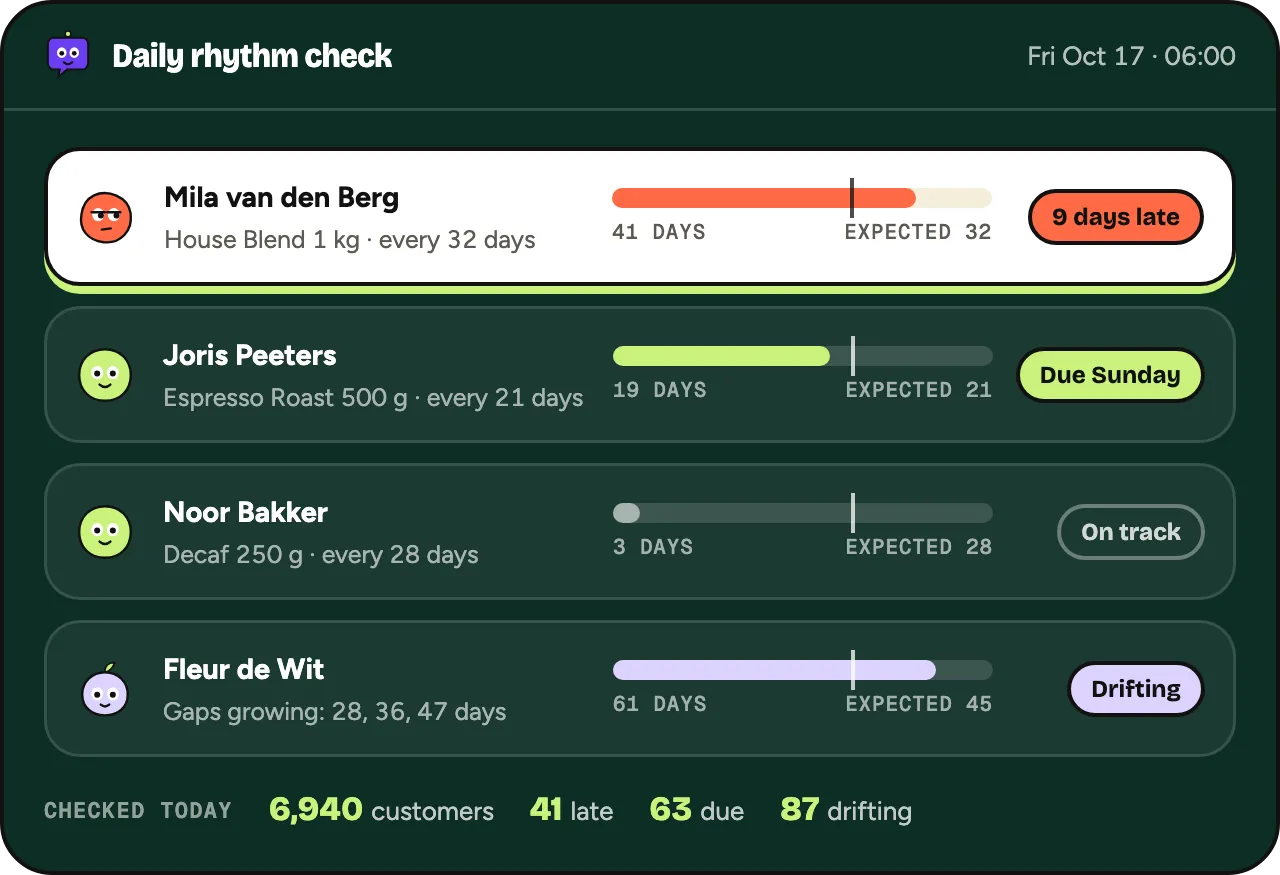
Oftenflow works on the reminder side: it calculates each customer’s own rhythm and proposes a reminder when their product is likely running out.
Oftenflow is in development. This describes what we’re building.